Starting Speckled Peas in a Seed Tray
Learn how to easily start growing speckled peas from seeds using a seed tray for controlled humidity and optimal germination.
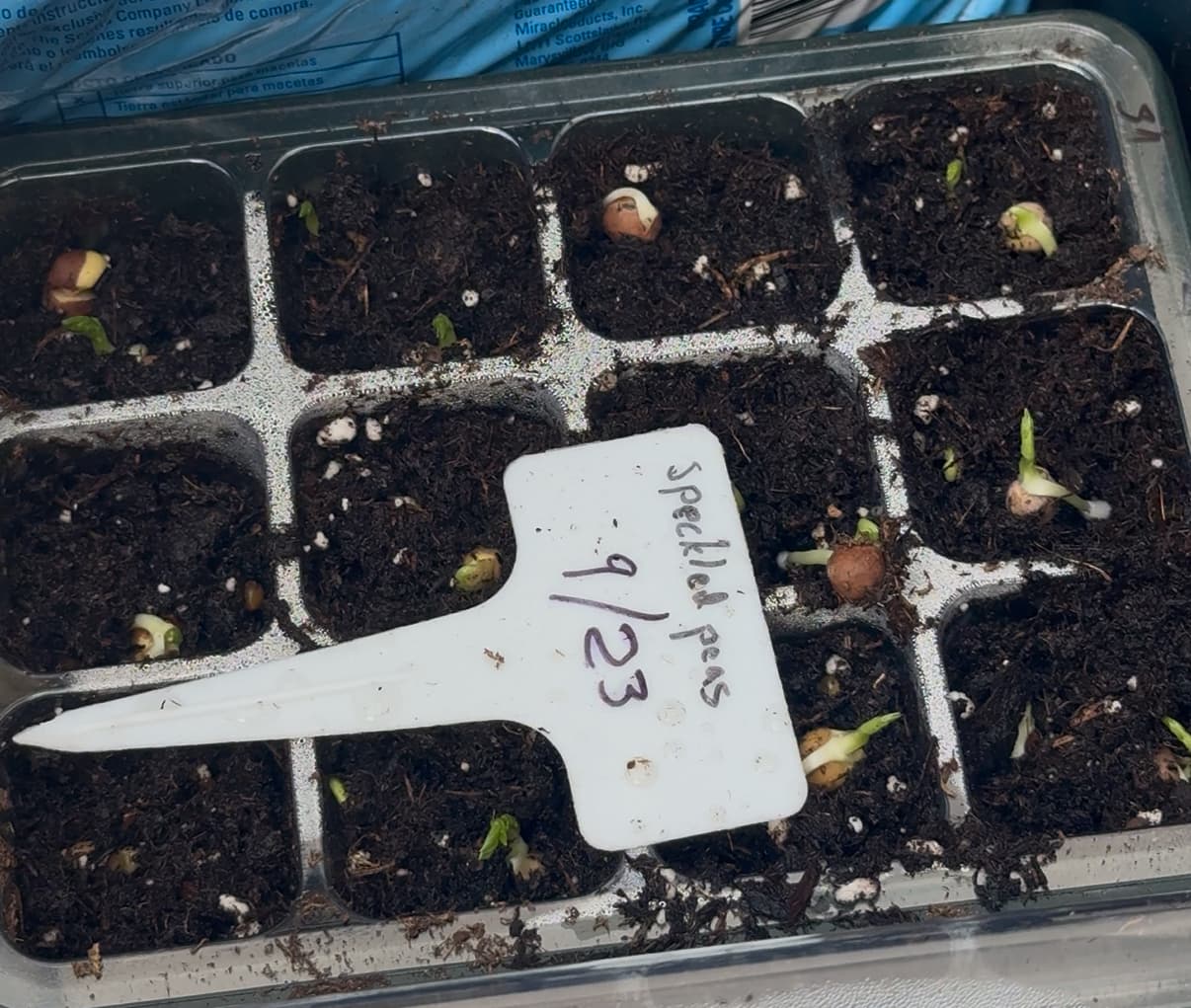
Speckled peas (also known as dun peas or field peas) are a fantastic addition to any homestead garden. They're nutritious, easy to dry for storage, and excellent for improving soil through nitrogen fixation. Starting them in a seed tray gives you a head start on the growing season and better control over germination conditions.
What You'll Need
- Speckled pea seeds
- Seed starting tray with cells (or a shallow container with drainage)
- Seed starting mix or light potting soil
- Spray bottle for watering
- Humidity dome or plastic wrap (optional)
Step-by-Step Guide
1. Soak the Seeds (Optional)
Soaking pea seeds for 8–12 hours before planting can speed up germination significantly. Place them in a bowl of room temperature water overnight.
2. Fill the Tray
Fill each cell of your seed tray with moistened seed starting mix. Press gently to eliminate large air pockets, but don't compact the soil too tightly.
3. Plant the Seeds
Place one seed per cell, about 1 inch deep. Cover lightly with soil and press gently.
4. Water and Cover
Mist the tray thoroughly with a spray bottle. If you have a humidity dome, place it over the tray. This keeps moisture levels consistent during the critical germination period.
5. Provide Warmth
Peas germinate best at 60–75°F (15–24°C). They don't need heat mats — room temperature is usually fine. Place the tray in a bright area but out of direct intense sunlight.
6. Watch for Sprouts
You should see sprouts in 5–10 days. Once they emerge, remove the humidity dome and ensure they get plenty of light (a sunny windowsill or grow light works well).
Transplanting
Once seedlings are 3–4 inches tall and have a few sets of true leaves, they're ready to transplant outdoors. Harden them off for a week by gradually increasing their outdoor exposure before planting in their final spot.
Peas prefer cool weather and can handle light frosts, so don't wait too long to get them outside in spring or fall.
Why Speckled Peas?
Speckled peas are a heritage variety that's been grown for centuries. They're:
- Versatile — eat fresh, dried, or as split peas for soup
- Nutritious — high in protein and fiber
- Soil builders — fix nitrogen, improving soil for the next crop
- Low maintenance — drought-tolerant once established
Give them a try this season — you won't be disappointed!